
Thermoplastic Line Marking Cost: 2026 UK Pricing and Budgeting Guide
Choosing the cheapest quote for your facility today usually means paying for the same job twice by 2027. You likely already recognise that a low initial thermoplastic line marking cost often masks poor material durability or hidden surface preparation fees that appear only after the work begins. It’s frustrating when a straightforward maintenance task turns into a complex financial puzzle filled with confusing unit prices and vague estimates. We value clarity over guesswork.
This guide strips away the industry jargon to provide a data-driven framework for your 2026 budgeting. We promise to show you exactly what drives the final invoice price and how to spot “too good to be true” quotes before you commit your budget. You’ll gain the confidence to choose a bespoke, long-term solution that actually protects your site’s safety and aesthetics. We’ll break down the essential components of a professional UK project, from surface removal requirements to specific material grades, so you can compare professional quotes with absolute certainty.
Key Takeaways
- Understand why heat-bonded resin offers superior durability compared to standard paints. It’s an investment in long-term surface integrity rather than a temporary fix.
- Learn how project scale and mobilisation fees influence your total thermoplastic line marking cost. We break down the data to help you leverage economies of scale for larger sites.
- Ensure your project meets strict British Standards (BS EN 1871) through professional application. Avoid the risks of DIY products that often fail to deliver a permanent bond.
- Identify bespoke budgeting strategies for high-traffic environments like commercial car parks and warehouses. Balance layout density with essential safety zones for better operational flow.
- Access transparent, fixed-price solutions that eliminate financial guesswork. Our no-nonsense approach provides clear, data-driven quotes with no hidden surprises.
What Determines the Cost of Thermoplastic Line Marking in the UK?
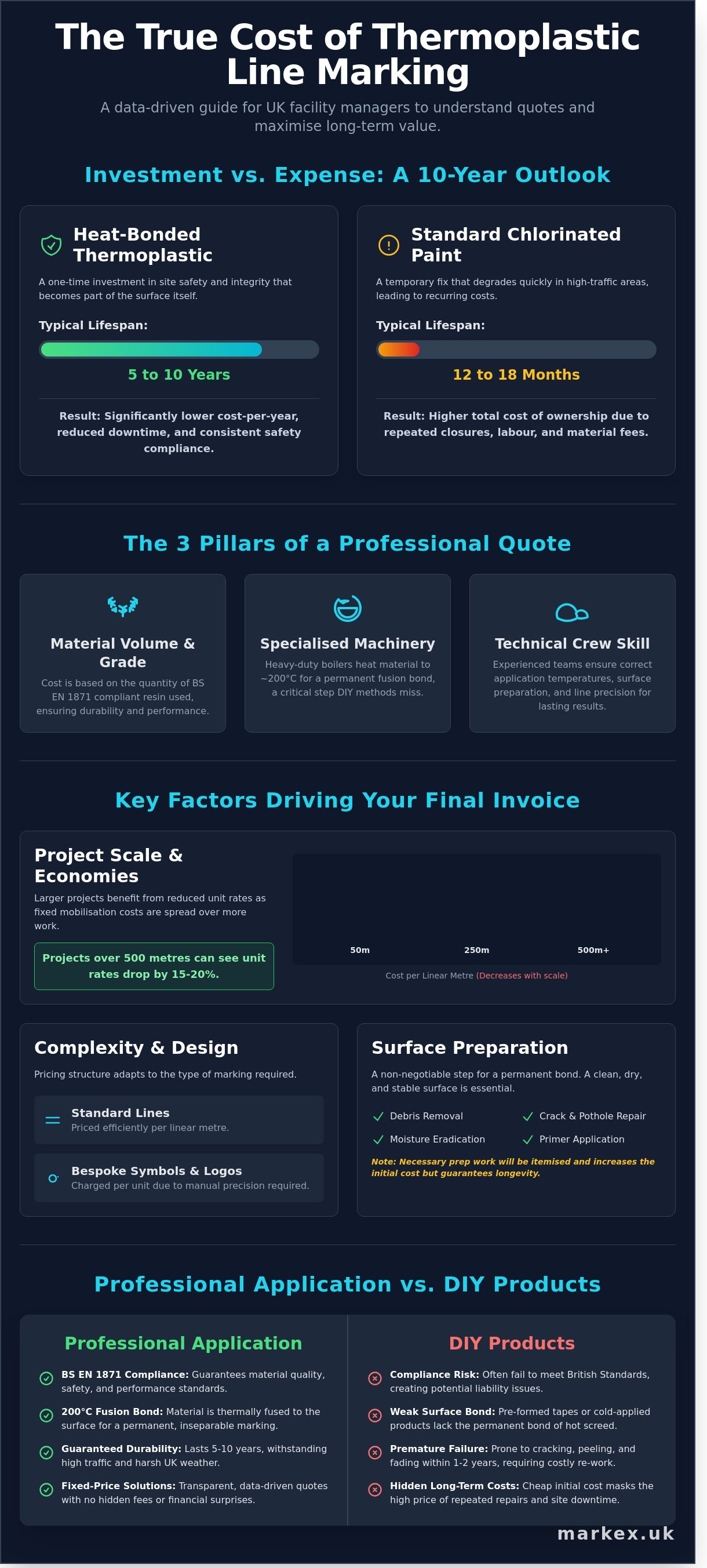
Thermoplastic isn’t your average paint. It’s a sophisticated resin-based compound that requires heating to approximately 200°C to achieve a fusion bond with the asphalt. This process ensures the marking becomes part of the road surface rather than a thin layer sitting on top. For high-traffic environments across the UK, this durability is non-negotiable. When calculating the thermoplastic line marking cost, experienced contractors like Markex Ltd look at three core pillars: material volume, specialised plant machinery, and the technical skill of the crew.
Prices typically follow a structured, transparent format. You’ll usually see quotes based on a rate per linear metre for standard lines, while bespoke symbols like disabled bays or directional arrows are charged per unit. This data-driven approach allows for precise budgeting and eliminates guesswork. Industry data shows that thermoplastic remains the standard for 95% of UK highway markings because it withstands the 30,000+ daily vehicle movements common on the UK’s busiest arterial roads. Choosing the right Road surface marking materials is the first step in ensuring a long-term return on investment for any commercial site.
Material Costs vs. Professional Installation
The method of application significantly shifts the price point. Preformed thermoplastic tapes offer a quick solution for small repairs or intricate logos, but they carry a higher material cost per metre. For larger car parks or road networks, screed or extrusion methods are far more efficient. These require heavy-duty boilers and specialised application tools to melt the material on-site. Bulk purchasing for projects exceeding 500 metres often reduces the unit rate by 15% to 20%. Professional installation by experts like Markex Ltd ensures the material hits the correct temperature for a permanent bond, which DIY alternatives simply can’t replicate.
The Longevity Factor: Cost-per-Year Analysis
Smart business owners look beyond the initial invoice to the total cost of ownership. While chlorinated rubber paint is cheaper upfront, it often requires a full refresh every 12 to 18 months in high-traffic zones. Thermoplastic lasts between 5 and 10 years depending on the substrate. This means the thermoplastic line marking cost, as quoted by trusted providers like Markex Ltd, spread over its lifespan is significantly lower. You avoid the hidden expense of repeated site closures and contractor call-out fees. Beyond durability, thermoplastic maintains 150 mcd/m²/lx of retroreflectivity and high skid resistance throughout its life, keeping your site compliant and safe without constant intervention.
Key Factors Influencing Your Professional Project Quote
Project scale determines your final invoice more than any other variable. Large-scale applications, such as major distribution centres or multi-storey car parks, benefit from significant economies of scale. While the total price is higher, the cost per linear metre typically drops as the volume of work increases. Mobilisation costs are a fixed reality; transporting specialised boilers, pre-heaters, and crews into central London requires careful planning and fuel expenditure. Smaller projects often trigger a minimum call-out fee to cover these baseline expenses.
Complexity adds another layer to the quote. Straight lines are efficient to lay. Bespoke logos, complex safety hatching, or custom school playground designs require manual precision and extra time. Scheduling also plays a vital role. Most London businesses can’t afford downtime during the day. Working at night or over the weekend prevents disruption, but it usually involves premium labour rates to compensate the crew for unsocial hours. We believe in total transparency, so we always break these costs down clearly in our initial proposals.
Surface Condition and Preparation Requirements
A permanent bond is impossible without a clean, dry surface. Thermoplastic is applied at roughly 200°C; any moisture or debris under the material will cause it to fail prematurely. If your site has existing potholes or deep cracks, these must be repaired before the markings go down. Oily surfaces or fresh tarmac often require a specialised primer to ensure the material bites into the ground. Maintaining the underlying tarmac is also crucial, and specialists like McCready Home Improvements provide essential advice on preventing moss growth that can compromise surface integrity. These preparation steps are essential for longevity, though they do increase the initial thermoplastic line marking cost.
Linear Metres, Symbols, and Project Scale
Material usage varies based on line width. Standard 100mm lines are the norm for most car parks, but 150mm lines are often required for high-speed roads or heavy-duty industrial zones. Standard symbols like disabled bays, charging point icons, and “Give Way” triangles are priced per unit. All professional applications must adhere to the UK Department for Transport guidelines to ensure safety and legal compliance.
Whether you’re managing a minor works project or a major infrastructure contract, our data-driven approach ensures you only pay for what you need. You can request a bespoke assessment to see how these variables impact your specific site requirements. This eliminates guesswork and provides a clear roadmap for your facility’s safety upgrades. Every quote we provide is tailored to your specific surface type and traffic volume to ensure a high-return investment.
Professional Application vs. DIY Products: A Cost-Benefit Analysis
Cutting corners on your thermoplastic line marking cost might seem like a smart budget move. It usually isn’t. While DIY rolls and “peel-and-stick” tapes are available at many trade counters, they lack the structural integrity of professional-grade screed. Contractors use high-capacity machinery to apply material at temperatures between 180°C and 200°C. This intense heat creates a fused bond with the tarmac. DIY products often sit on the surface, leading to premature peeling and “ghosting” when they eventually fail.
The financial risk of a failed DIY application is high. If the markings don’t adhere, you’ll pay twice. First, you pay for the removal of the failed product, which often requires specialist grinding or high-pressure water blasting. Second, you pay for the professional redo. Choosing a contractor ensures your project meets the thermoplastic line marking cost efficiency goals by delivering a lifespan of 5 to 7 years rather than just 6 months.
The Hidden Costs of DIY Thermoplastic Tapes
DIY isn’t as cheap as the initial price tag suggests. You must factor in the hire of gas torches, safety equipment, and the massive time drain on your staff. A professional three-person crew can mark a 100-space car park in under four hours. A DIY attempt on the same area frequently takes two full days and results in wobbly lines or uneven thickness. Poor adhesion on aged tarmac is the most common cause of failure, as older surfaces require specific primers that DIY kits often omit.
Safety Compliance and Regulatory Peace of Mind
Professional markings provide a legal safety net. Contractors guarantee compliance with British Standards, specifically BS EN 1871. This ensures the correct slip-resistance ratings for pedestrian areas, reducing your liability in the event of a slip or trip accident. Following established thermoplastic durability standards is essential for site safety and long-term visibility, especially in high-traffic London environments.
Contractors also manage the heavy lifting of health and safety. They provide bespoke Risk Assessments and Method Statements (RAMS) for every job as part of the standard fee. This transparency removes the guesswork from your site management and ensures the work is carried out without endangering your employees or the public. You aren’t just paying for lines on the ground; you’re buying a data-backed guarantee of quality and safety.
Budgeting for Commercial and Public Sector Projects
Commercial projects require a bespoke strategy that balances initial thermoplastic line marking cost with long-term durability. It isn’t just about paint on tarmac. It’s about asset management. For retail car parks, your budget must account for maximum bay density while maintaining safe pedestrian zones. Efficient layouts can increase parking capacity by up to 15%, directly impacting your site’s commercial value. In industrial warehouses, high-visibility markings for forklift routes are a legal necessity under HSE guidelines. These safety zones prevent accidents and keep your operations running without costly interruptions.
London schools often opt for vibrant, educational markings in playgrounds. While these pre-formed thermoplastic designs cost more than standard white lining, they offer a lifespan of up to 10 years even with heavy daily use. For public roads and highways, meeting BS EN 1871 standards is mandatory. This ensures markings remain visible during wet nights, which is a critical safety metric for local authorities. Investing in higher-grade materials now prevents the need for frequent, disruptive maintenance cycles later.
Estimating Costs for Car Parks and Facilities
Retail hubs require clear numbering and hatching to manage traffic flow effectively. These details are vital for customer experience. Anti-skid surfacing is another essential budget item, particularly for ramps and turning circles where traction is limited. We recommend planning for phased works. By completing the project in sections, your facility remains at least 50% operational throughout the process. This approach protects your revenue while we upgrade your infrastructure.
Line Removal: An Often Overlooked Expense
Starting with a clean slate is the only way to ensure a professional finish. Hydro-blasting is the gold standard for removal. It uses high-pressure water to lift old markings without damaging the underlying substrate. Mechanical scabbling is a more budget-friendly alternative, though it can leave visible scarring on the tarmac. You should avoid thermal “burning off” methods entirely. This process damages the bitumen and leads to premature surface failure. Budgeting for professional removal ensures your new, modern layout isn’t compromised by “ghost lines” from the past.
Every project is unique. We focus on data-driven solutions that provide the best return on your investment. Don’t guess your requirements when you can rely on proven expertise.
Transparent, Fixed-Price Solutions with Markex Ltd
Markex Ltd operates with a clear, no-nonsense philosophy that puts your budget first. We don’t rely on vague estimates or ballpark figures that change once the work begins. Instead, our team provides data-driven quotes based on over 40 years of expertise in delivering nationwide marking contracts. We’ve refined our processes to ensure that every London project, from high-traffic logistics hubs to private car parks, receives the same level of analytical precision.
Our fleet of high-capacity machinery and expert crews can handle major infrastructure works or minor repairs with equal efficiency. We understand that your thermoplastic line marking cost is a significant investment in site safety and compliance. That’s why we focus on delivering clarity through evidence rather than intuition. By choosing Markex, you’re partnering with a team that values honesty over hype and results over jargon.
Our Bespoke Approach to Project Contracting
We use our four decades of industry knowledge to do more than just apply paint. Our technicians often suggest cost-saving layout optimisations that reduce material waste without compromising on safety. For example, adjusting a bay configuration by just a few centimetres can often increase capacity by 8% while lowering the total linear metres required. This strategic thinking ensures your thermoplastic line marking cost remains as low as possible without sacrificing quality.
- Precision Engineering: Every line is applied with millimetre accuracy using industry-leading materials.
- The Markex Guarantee: Our markings are designed to stand the test of time, resisting heavy HGVs and harsh London weather.
- Proven Durability: We select specific thermoplastic blends based on your facility’s unique traffic volume and surface type.
Our commitment to transparency means every project quote includes a granular breakdown of materials and labour, ensuring you never face hidden extras or unexpected surcharges.
Get Your Professional Line Marking Quote Today
Starting your project is a straightforward process designed to respect your time. You can request a comprehensive site survey where our experts assess your surface conditions in person, or provide us with your site plans for a rapid, plan-based estimate. We’ve removed the guesswork from the procurement process to help you make informed financial decisions quickly. Our goal is to provide a roadmap that leads directly to a safer, more efficient facility.
This level of financial clarity is essential for businesses managing tight annual budgets or complex facility maintenance schedules. For small and mid-sized B2B firms looking to apply this same strategic oversight to their growth, Budget Boosters provides senior marketing leadership to help scale effectively. We take the stress out of site upgrades by providing a reliable, professional service that keeps your operations moving without delay.
Enquire about your thermoplastic project with Markex to receive a clear, fixed-price quote that aligns with your specific business goals.
Secure Precision for Your 2026 Infrastructure Budget
Budgeting for your facility shouldn’t involve guesswork or vague estimates. While the thermoplastic line marking cost varies based on surface preparation and total linear meterage, the long-term ROI of professional application is undeniable. High-grade materials applied by experts deliver durability that DIY alternatives simply can’t match. Markex Ltd leverages over 40 years of industry experience to provide nationwide UK coverage, specialising in car park and commercial safety markings that meet strict regulatory standards. We replace uncertainty with transparency, ensuring your project stays on track without hidden surcharges or unexpected fees. By prioritising durable materials now, you avoid the recurring expenses of frequent maintenance and premature fading. Our team focuses on delivering bespoke, data-driven solutions that protect both your site users and your bottom line. You don’t have to navigate complex pricing structures alone. Let’s build a clear, durable roadmap for your site safety together.
Request a bespoke, fixed-price quote for your line marking project
Frequently Asked Questions
How much does thermoplastic line marking cost per metre in the UK?
Thermoplastic line marking cost typically ranges between £1.50 and £5.00 per linear metre for standard 100mm lines. These prices fluctuate based on the total volume of the project and the specific layout required. Large scale motorway works benefit from economies of scale, while smaller car park projects usually sit at the higher end of the pricing spectrum.
We provide bespoke quotes that reflect the exact requirements of your site. This transparent approach ensures you don’t pay for unnecessary overheads. Our data-backed pricing models help business owners plan their maintenance budgets with total clarity and no hidden surprises.
Is thermoplastic more expensive than road marking paint?
Thermoplastic carries a higher initial price point than traditional chlorinated rubber or acrylic paints, often costing 20% to 30% more upfront. While the initial investment is higher, it’s a more strategic choice for high-traffic areas. Thermoplastic lasts up to five times longer than paint, making it the more cost-effective solution over a three year period.
Choosing the right material is about long-term value rather than just the lowest entry price. We focus on durability to ensure your markings remain visible and compliant for years. This reduces the frequency of re-marking visits and saves you money on long-term maintenance cycles.
What is the minimum call-out charge for professional line marking?
Most professional contractors in the UK apply a minimum call-out charge ranging from £350 to £550. This fee covers the transport of heavy machinery, material heating time, and labour for projects that don’t reach a specific metreage. It’s a standard industry practice that ensures even minor repairs receive the same high-quality equipment and expertise as major infrastructure tasks.
We believe in honest communication regarding these baseline costs. If your project is small, we often suggest combining several minor repairs into a single visit. This proactive scheduling helps you maximise the value of the call-out fee and improves the overall safety of your premises.
How long does thermoplastic line marking take to dry before I can use the surface?
Thermoplastic markings dry almost instantly, typically becoming track-free within 60 to 120 seconds of application. You can usually reopen your road or car park to traffic in less than five minutes in standard UK weather conditions. This rapid curing process is a significant advantage for busy London businesses that can’t afford long periods of downtime.
Our teams work with precision to ensure the application is fast and the results are durable. Because the material sets so quickly, it eliminates the risk of “tracking,” where vehicles accidentally spread wet paint across your site. You get a clean, professional finish that’s ready for immediate use.
Does the colour of the thermoplastic (yellow, white, or red) affect the price?
White and yellow are the industry standards and represent the most budget-friendly options for any project. Specialist colours like red, green, or blue often cost 15% to 25% more due to the higher price of the organic pigments used in the manufacturing process. These vibrant colours are essential for safety zones, disabled bays, or electric vehicle charging points.
We provide tailored advice on where to use specialist colours to meet regulatory requirements without overstretching your budget. Every colour choice is backed by a specific safety or navigational purpose. This ensures your site is compliant and functional while keeping your thermoplastic line marking cost under control.
Can thermoplastic be applied over old, existing road markings?
You can apply new thermoplastic over existing markings if the old surface is still well-bonded to the substrate. If the previous lines are flaking or show more than 20% surface failure, they must be removed before the new application. Applying fresh material over a failing base leads to premature wear and wastes your investment.
Our technicians perform a thorough site assessment to check the integrity of your current markings. We don’t rely on guesswork; we use physical adhesion tests to decide if a direct overlay is viable. This evidence-based approach guarantees that your new lines will stay bright and intact for their full expected lifespan.
Are there extra costs for working at night or during the weekend?
Working outside standard business hours usually incurs a price uplift of 25% to 50% to cover antisocial shift premiums for the crew. Many London firms choose night or weekend slots to avoid closing their car parks during peak trading hours. This allows for a seamless project delivery that doesn’t disrupt your customers or staff.
We weigh these additional labour costs against your potential revenue loss to find the most logical schedule. Our goal is to provide a results-oriented service that fits your operational needs. Clear reporting on these costs allows you to make an informed decision about the best time for your installation.
How much does it cost to remove old thermoplastic lines?
Removing old thermoplastic lines typically costs between £5.00 and £15.00 per linear metre depending on the method used. Techniques like thermal lancing, mechanical grinding, or high-pressure hydroblasting vary in speed and surface impact. The choice of method depends on the condition of the underlying tarmac or concrete and your specific site requirements.
We offer a range of removal services to ensure a clean slate for your new markings. Removing old, confusing lines is just as important for safety as laying new ones. We provide a clear roadmap for the removal process, ensuring the surface is perfectly prepared for a fresh, professional application.