
UK Road Markings: The Essential Guide to Compliance, Safety, and Specification
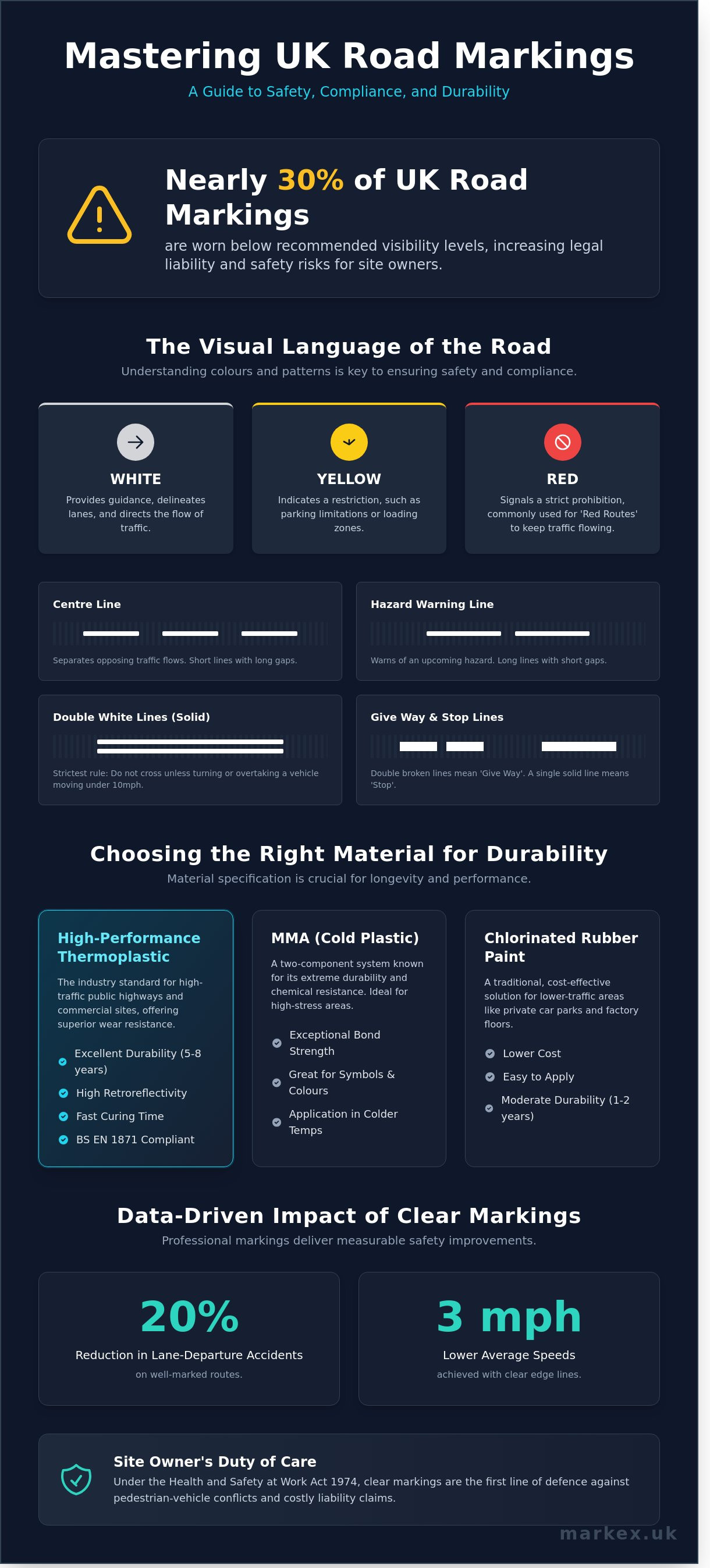
According to a 2023 industry audit, nearly 30% of markings on major British roads have worn below the recommended visibility levels. When lines fade, safety drops and your legal liability as a site manager or developer increases. It is frustrating to invest in infrastructure only to see it degrade under heavy traffic within months. You need a solution that lasts, especially when navigating the strict regulations surrounding uk road markings on both public highways and private commercial sites.
We understand that the distinction between mandatory Highway Code symbols and bespoke private site requirements often feels unnecessarily complex. You want clear, durable results without the guesswork or the fear of non-compliance. This guide provides the clarity you need to master UK marking regulations and select the right materials for maximum longevity. We will break down specific line meanings, compare high-performance thermoplastics with cold-applied plastics, and give you a data-driven framework for hiring a specialist contractor who delivers on their promises.
Key Takeaways
- Navigate the legal complexities of the Highway Code to ensure your uk road markings remain fully compliant and safe for all users.
- Compare the durability and visibility of thermoplastic, MMA, and chlorinated rubber to select the perfect material for your specific surface and traffic volume.
- Master the visual language of road safety by understanding how different colours and patterns influence driver behaviour and site navigation.
- Implement a professional site safety audit using our structured framework to pinpoint high-risk areas before they become costly liabilities.
- Move beyond guesswork with a bespoke, data-driven approach designed to deliver transparent results and long-lasting infrastructure.
The Strategic Role of UK Road Markings in Infrastructure
Effective infrastructure relies on total clarity. Road surface markings in the UK act as the primary language of our streets, providing the navigation and regulation required to keep the nation’s traffic moving safely. These markings aren’t just paint on asphalt; they’re a strategic tool designed to dictate traffic flow and protect vulnerable road users. Without them, the vast network of roads across the country would descend into immediate chaos.
The legal framework surrounding these markings is rigorous. The Highway Code sets the benchmark for public highways, but these standards apply equally to private sites like retail parks and industrial estates. If your markings are faded or non-compliant, you’re not just losing aesthetic value. You’re increasing your exposure to risk. Industry data indicates that clear uk road markings can reduce lane-departure accidents by up to 20%. Neglecting these assets leads to higher liability and a measurable increase in avoidable collisions.
By 2026, the shift toward smart-city integration has changed the requirements for surface markings. High-reflectivity materials are now essential to support Autonomous Emergency Braking (AEB) and lane-assist technologies. These vehicle sensors require crisp, high-contrast lines to function correctly. We’ve moved away from guesswork. Today, marking placement is a data-driven process that ensures every line serves a specific safety purpose.
Safety and Liability for Site Owners
Site owners hold a legal “Duty of Care” under the Health and Safety at Work Act 1974. Clear markings are your first line of defence against pedestrian-vehicle conflict in busy commercial hubs. Using high-friction, anti-skid surfacing in high-risk zones, such as loading bays or tight corners, significantly reduces braking distances. It’s a results-oriented strategy to protect your business from costly insurance claims and ensure employee safety. Professional markings create a logical flow that eliminates confusion before it leads to an accident.
The Evolution of British Marking Standards
The industry has evolved beyond simple paint applications. Modern uk road markings rely on high-performance thermoplastic that meets BS EN 1871 standards for durability and luminance. Bespoke marking plans have replaced the one-size-fits-all approach. We focus on tailored layouts that reflect the specific traffic volume and vehicle types of your site. This transition ensures longevity and maximum visibility in all weather conditions. Key components of modern standards include:
- High-performance thermoplastic: Offers superior wear resistance compared to traditional cold-applied paints.
- Reflective glass beads: Enhanced retroreflectivity for night-time visibility and sensor detection.
- BS EN 1871 Compliance: Ensures materials meet strict UK requirements for skid resistance and colour fastness.
- Bespoke Layouts: Custom-designed plans that optimise space and improve vehicle throughput.
Decoding the Highway Code: Essential Line Meanings
UK road markings aren’t just paint on tarmac; they’re a data-driven safety system designed to influence driver psychology. Understanding this visual shorthand is vital for site compliance and public safety. White lines provide guidance. Yellow signals a restriction. Red indicates a strict prohibition, frequently found on London’s busiest arteries. According to The Highway Code, these patterns create a predictable environment that reduces collision rates by up to 20% on well-marked routes.
Longitudinal lines run with the traffic flow, while transverse lines cross it. Reflective studs, or “cats eyes,” enhance this system. Invented by Percy Shaw in 1934, they use retroreflection to guide drivers through 0% ambient light conditions. White studs mark the lane, while red studs mark the left edge and green marks slip roads.
Lines Along the Carriageway
Standard centre lines feature short gaps. When these gaps shorten and the lines lengthen, you’ve entered a hazard warning zone. It’s a clear signal to stay alert. Double white lines are the strictest uk road markings for lane discipline. You must not cross them unless turning into a property or overtaking a stationary vehicle, a cyclist, or a horse travelling under 10mph. Edge lines define the road’s limit, often helping drivers maintain a consistent speed by narrowing the perceived lane width, which data suggests can lower average speeds by 3mph.
Lines Across the Carriageway
Transverse markings dictate the flow of junctions. A solid stop line requires a full halt. Give way markings, usually double broken lines, establish right-of-way. In London, Advanced Stop Lines (ASLs) provide a dedicated “bike box” for cyclists. Data from Transport for London (TfL) shows these zones significantly reduce “left-hook” accidents at 85% of monitored junctions. Zebra and Parallel crossings use high-friction coatings to ensure pedestrian safety is both visible and physical.
Waiting and Loading Restrictions
Yellow lines control parking. A single yellow means restricted hours, while double yellows mean no waiting at any time. Look for “blips” on the kerb; these indicate loading bans. Red Routes are a London staple, managed by TfL to keep 580km of the city’s most critical roads moving. These strictly forbid stopping for any reason. Clearways take this a step further, ensuring major arteries remain free of obstructions. If you need a bespoke marking strategy for your private site, we provide tailored solutions that mirror these official standards.
Materials and Durability: Why Specification Matters
Visibility saves lives. High-performance uk road markings rely on glass beads embedded in the material. These beads create retro-reflectivity. They bounce headlight beams directly back to the driver. Night-time visibility drops by 70% without these microscopic spheres. Choosing the right material is a strategic business decision. It’s about the Total Cost of Ownership (TCO). While chlorinated rubber paint costs less upfront, it often fails within 6 months in busy London boroughs. Thermoplastic typically lasts 3 to 5 years. This durability reduces long-term maintenance spending by 40% compared to frequent repainting cycles.
UK weather is a major factor in material choice. London averages 106 rainy days per year. Constant moisture and winter frost cycles can strip low-quality paint from the substrate. The Road Safety Markings Association provides clear guidelines on material performance under these conditions. Following these standards ensures every installation meets legal safety requirements and survives the British climate. We focus on data-driven material selection to ensure your markings remain visible for years, not just months.
Thermoplastic: The Industry Gold Standard
Thermoplastic is the most common choice for UK highways. It arrives as a solid material and is heated to 200°C for application. This heat creates a thermal bond with the bitumen. The marking fuses to the road surface. It’s incredibly resilient. It handles the 40-tonne weight of HGVs and constant urban traffic. Because it sets in under 120 seconds, site downtime stays low. This speed keeps London roads open and productive. It provides a reliable, bespoke solution for high-volume routes like the A10 or the M25.
Specialist Coatings and Anti-Skid Solutions
Safety requires more than basic lines. High-friction surfacing (HFS) uses calcined bauxite to provide extra grip. It reduces braking distances by 33% at junctions and pedestrian crossings. For areas requiring specific branding or extreme durability, MMA (Methyl Methacrylate) is the best option. This cold-applied plastic resists chemical spills and heavy wear. Modern sustainable developments now use solar-reflective coatings. These materials lower surface temperatures by 10°C. This protection prevents asphalt from cracking during summer heatwaves and extends the life of the entire road structure.
Planning Your Marking Project: A Professional Framework
Executing a successful project involving uk road markings requires more than just a crew and a tin of paint. It demands a data-driven strategy that prioritises safety and durability. We’ve developed a five-step framework to ensure your London project delivers a high return on investment without the usual operational headaches.
- Step 1: Conduct a site safety audit. Map out every high-risk conflict point where vehicles and pedestrians intersect. Identifying these zones early prevents accidents and ensures your layout complies with the latest safety regulations.
- Step 2: Choose materials based on environment. Don’t use a one-size-fits-all approach. High-traffic London junctions require heavy-duty thermoplastic, while indoor logistics hubs often benefit from fast-curing, cold-applied MMA (Methyl Methacrylate).
- Step 3: Prioritise surface preparation. This is the secret to longevity. We ensure the substrate is clean, dry, and structurally sound before a single drop of material touches the ground.
- Step 4: Develop a phased installation plan. Minimise disruption by scheduling works during off-peak hours. In London, we often recommend night shifts between 20:00 and 05:00 to avoid heavy congestion and local access issues.
- Step 5: Establish a maintenance schedule. Visibility isn’t permanent. A proactive 12-month inspection and cleaning programme ensures your markings remain compliant and effective for their entire lifecycle.
Surface Preparation and Line Removal
Applying fresh lines over old, flaky paint is a recipe for failure. It creates a weak bond that leads to premature peeling and “ghosting,” which can confuse drivers. We use two primary methods for removal. Hydro-blasting uses high-pressure water to strip markings without damaging the underlying asphalt. For tougher concrete surfaces, mechanical scabbling provides the necessary profile for new materials to grip. We never start until the surface moisture is below 5%, ensuring maximum adhesion for your uk road markings.
Choosing the Right Contractor
Don’t settle for guesswork when it comes to infrastructure. Look for a partner with NVQ Level 2 qualifications and National Highway Sector Scheme 7 (NHSS7) accreditation. These standards guarantee the team understands the technical complexities of British road systems. Transparency is equally vital. Your contractor should provide data-driven reports that track material thickness and skid resistance. This no-nonsense approach to project management ensures your scaling business stays safe and compliant without hidden costs or delays. For a comprehensive guide on evaluating professional road marking contractors and ensuring BS EN 1871 compliance, consider the essential criteria that guarantee long-term durability and regulatory compliance.
Ready to transform your site with precision and clarity? Explore our bespoke uk road markings solutions to get started.
Precision Line Marking with Markex Ltd
Markex Ltd brings over 40 years of direct experience to the highway and commercial marking sector. We don’t just apply paint; we engineer safety and efficiency on every surface we touch. Our team handles everything from major national road networks to private commercial car parks with the same level of technical precision. We rely on data-driven solutions to ensure every project meets strict compliance standards. This commitment to transparency ensures you receive clear delivery timelines and honest progress reports without the typical industry jargon.
Our bespoke approach means we treat every project as a unique challenge. A logistics hub requires different durability standards than a retail car park. We’ve applied this logic to high-speed runways, industrial warehouses, and primary school playgrounds. We believe that honesty and transparency are the fundamental pillars of a successful strategic partnership. By focusing on clear communication, we build trust with business owners who need reliable results rather than empty promises.
National Coverage, Local Expertise
We’ve built the capacity to scale for major infrastructure contracts across the entire country. Managing uk road markings on a national level requires a blend of high-level logistics and local site knowledge. We source high-quality materials, including thermoplastic and cold-applied plastic, to guarantee long-term durability and skid resistance. Our team doesn’t cut corners. We take a no-nonsense approach to surface maintenance and pothole filling, ensuring that the foundation is as solid as the markings themselves.
- High-friction surfacing for improved road safety in high-risk zones.
- Durable thermoplastic materials designed for heavy traffic loads.
- Rapid-cure solutions to minimise road closure times and disruption.
- Full compliance with Chapter 8 traffic management requirements.
Get a Bespoke Quote for Your Project
We provide clear, fixed-price contracting for your peace of mind. We eliminate the guesswork from your budget by providing detailed assessments before any work begins. The Markex guarantee focuses on three core outcomes: precision, safety, and long-term ROI. By using superior materials and proven application techniques, we ensure your uk road markings last longer and remain visible under all weather conditions. This reduces the total cost of ownership over the lifespan of the surface.
Every site audit we conduct is thorough and evidence-based. We look at traffic volume, surface condition, and safety requirements to propose the most effective solution. Our goal is to create a safe, organised environment that supports your operational goals. Don’t leave your site safety to chance. Contact Markex for a professional site audit and let’s discuss how our expert team can support your next project with a tailored, high-performance solution.
Future-Proof Your Site with High-Performance Marking
High-quality infrastructure relies on more than just asphalt. It requires precise, compliant markings that stand the test of time and weather. You’ve seen how the right materials prevent premature wear and how strict adherence to the Highway Code keeps every road user safe. Choosing the right partner for your uk road markings project means moving away from guesswork and toward a data-driven strategy that prioritises long-term durability.
Markex brings over 40 years of industry experience to every site. We combine national UK coverage with specialised machinery to deliver results that meet the highest technical specifications. Our team focuses on transparency and bespoke solutions, ensuring your markings are both functional and cost-effective. We don’t just paint lines; we build clearer, safer environments for your business or local authority.
This focus on technical precision and bespoke quality extends beyond the road surface; for property owners aiming to match their high-spec infrastructure with premium building features, it is well worth the time to explore Timber Sash Windows for a finish that balances heritage style with modern efficiency.
Take the first step toward a safer, more compliant site today. Request a bespoke line marking quote from the experts at Markex and let’s start planning your project with total clarity. Your infrastructure deserves the best possible finish.
Frequently Asked Questions
What is the difference between a single and double yellow line?
Single yellow lines restrict parking during specific hours shown on nearby signs, while double yellow lines prohibit parking at any time. It’s a common mistake to look for signs near double yellows; the lines themselves represent a 24 hour restriction. Local London councils set the specific operational windows for single lines, so you must check the plates before leaving your vehicle.
How long do thermoplastic road markings typically last in the UK?
Thermoplastic uk road markings typically last between 3 and 5 years depending on the volume of traffic. High-stress areas like London junctions might require refreshing after 24 months to maintain safety standards. We use data-driven assessments to determine when the glass beads lose reflectivity, ensuring your site remains compliant and visible.
Are road markings on private land legally enforceable?
Road markings on private land are enforceable through contract law rather than the Road Traffic Regulation Act 1984. When a driver enters a private car park with clear signage and markings, they’re entering a contract with the owner. Failure to follow “No Parking” or “Disabled Only” markings can result in a Parking Charge Notice, which the BPA often caps at £100.
Can you apply road markings in wet weather?
You can’t apply thermoplastic road markings in wet weather because moisture prevents the material from bonding to the road surface. The ground must be completely dry and the temperature should be at least 5 degrees Celsius for a successful installation. We don’t guess with the weather; we use precise scheduling to ensure a bespoke, long-lasting finish that won’t peel or fail.
What is the standard size for a UK parking bay in 2026?
The standard UK parking bay for 2026 remains 2.4 metres wide by 4.8 metres long according to Department for Transport guidelines. While some bespoke designs for electric vehicle charging points now use a larger 3 metre width, the 2.4m x 4.8m footprint is the baseline for most commercial projects. This layout maximizes capacity while providing enough space for modern vehicle doors to open safely.
How much does it cost to remove old road markings?
Removing old uk road markings generally costs between £5 and £15 per linear metre based on the removal method. High-pressure water blasting is the cleanest option for sensitive London sites, though thermal lancing is often more cost-effective for large-scale highway projects. We provide transparent pricing based on the total square footage and the specific surface material involved.
What are the safety requirements for warehouse floor markings?
Warehouse markings must follow the Health and Safety (Safety Signs and Signals) Regulations 1996 to ensure worker protection. These rules demand clear separation between pedestrian walkways and forklift operating zones to prevent collisions. Using high-visibility yellow for hazard zones and white for traffic lanes provides a no-nonsense safety roadmap that reduces workplace accidents by a measurable margin. For similar organizational needs in exhibition halls and trade shows, Coker Exhibition Systems Ltd (CokerExpo) provides specialized flooring and display solutions to define pedestrian routes safely.
Why are some road markings red instead of white or yellow?
Red markings indicate a “Red Route” where stopping is strictly prohibited to keep London’s busiest roads moving. Transport for London (TfL) manages these routes to prevent congestion caused by delivery vans or idling cars. A double red line means no stopping at any time, while a single red line indicates specific restricted hours that are clearly detailed on roadside signs.